A smart-home device that cannot run a VPN app can be assigned to a protected route on a compatible router.
Smart-home device router setup
Route a smart-home device through a compatible VPN router
The VPN profile runs on the router. The smart-home device then uses that protected router connection.
Before you begin
Confirm the router has a supported WireGuard or OpenVPN client and that you can sign in to its administration page.
Connect the smart-home device to that router and identify it in the router device list.
Back up the router settings before changing VPN or policy-routing options.
Choose the router protocol and delivery method
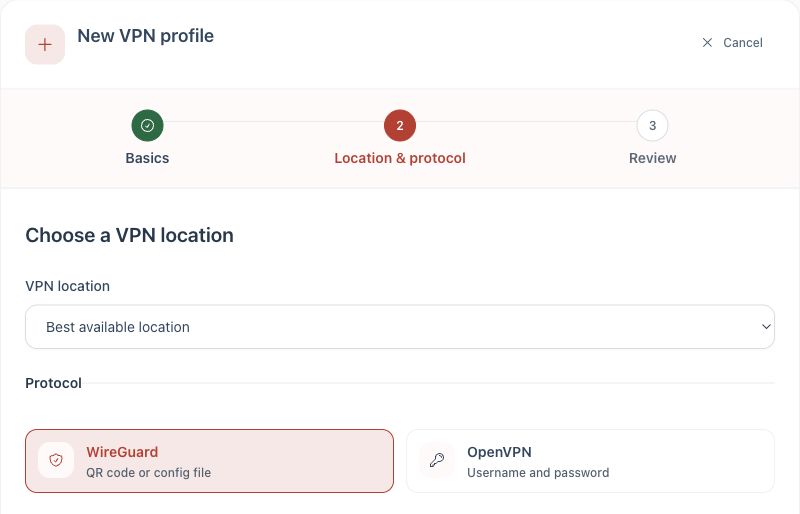
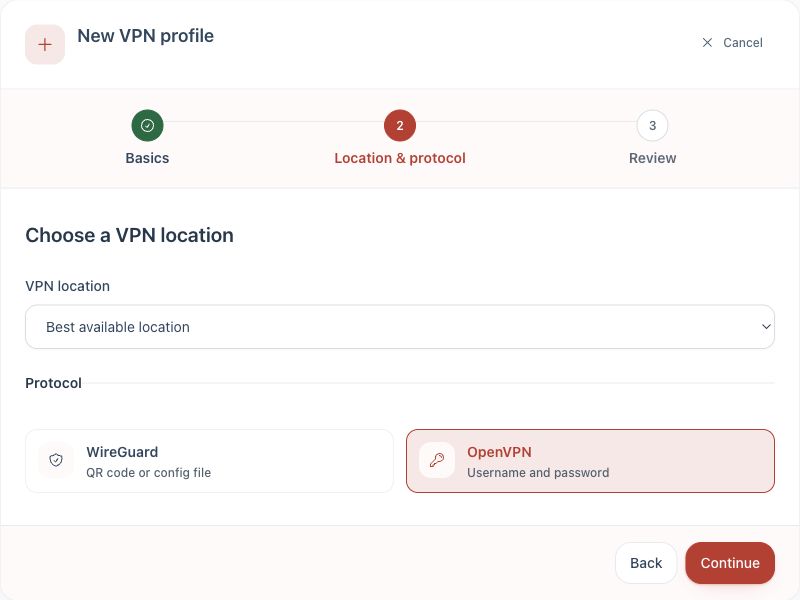
Create a separate profile for the router. Use WireGuard when the selected router guide supports it, or OpenVPN when it does not.
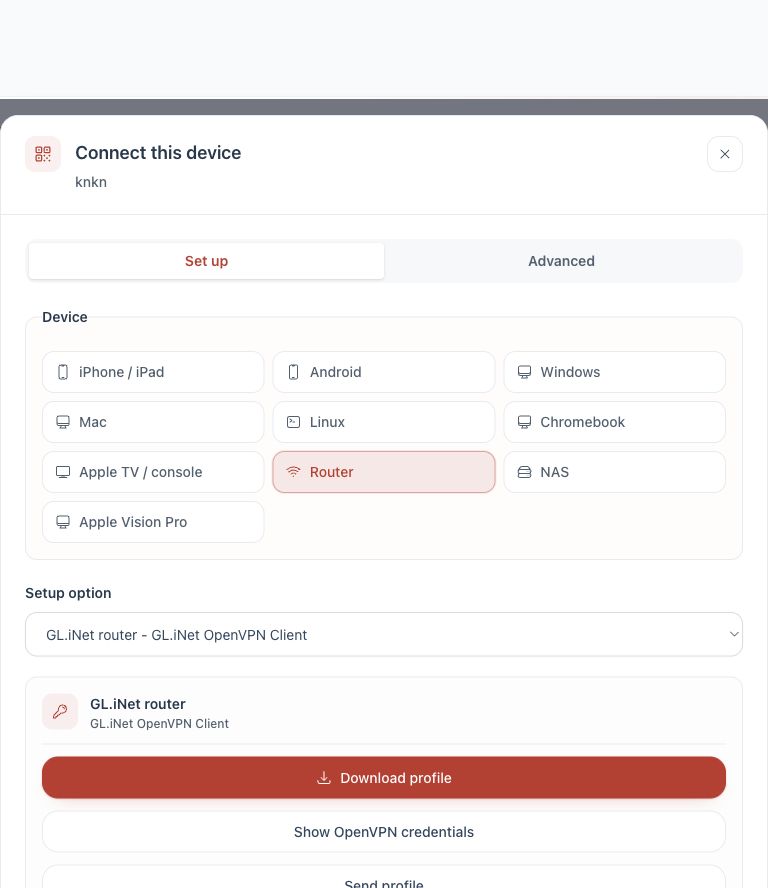
WireGuard download: download the .conf file directly.
WireGuard email: select Send profile, choose Email and queue the .conf attachment.
WireGuard device code: select Send profile, then Get code. On the device being used to configure the router, open dash.teklanvpn.com/get, enter the code and download the file. The code expires after 15 minutes and works once.
OpenVPN download or email: download the .ovpn file or queue it by email under Send profile. Select Show OpenVPN credentials and keep the displayed private-key password available. Device access codes are not offered for OpenVPN.
1. Choose WireGuard when the router supports it.2. Choose OpenVPN when that is the router's supported protocol.3. Choose Router and select its exact firmware.
Complete the setup
For WireGuard: create a WireGuard profile, download its .conf file and follow the router guide for a compatible WireGuard client.
For OpenVPN: create an OpenVPN profile, select Connect device, choose Router, then select the exact router or firmware.
Follow the instructions for that router. Do not use directions written for a different firmware.
Import the profile, connect the router VPN client and confirm that it stays connected.
Use the router policy-routing controls to assign the smart-home device to the VPN profile.
Restart the smart-home device network connection so it receives the current route and DNS settings.
Test the router policy before relying on the connection.
Check the connection
Confirm the VPN client reports Connected in the router administration page.
Confirm the smart-home device is assigned to the VPN policy rather than the normal internet route.
Restart the smart-home device network connection after changing the policy.
If the device cannot open an IP-checking site, temporarily assign a phone to the same policy and confirm its public IP address changes.
If it does not connect
Generate a fresh profile and confirm that the correct router firmware was selected.
If the router connects but smart-home device does not use the VPN, recheck its policy-routing assignment.
Remove any older VPN policy that also targets smart-home device.
Check the router clock and DNS settings if the tunnel repeatedly drops.